Village crafts & buildings
Lace, embroidery & painted homes
A flower painted on a wall and a flower sewn into a garment both begin with someone’s practiced hand. Compare the work without assuming the patterns have the same meaning.
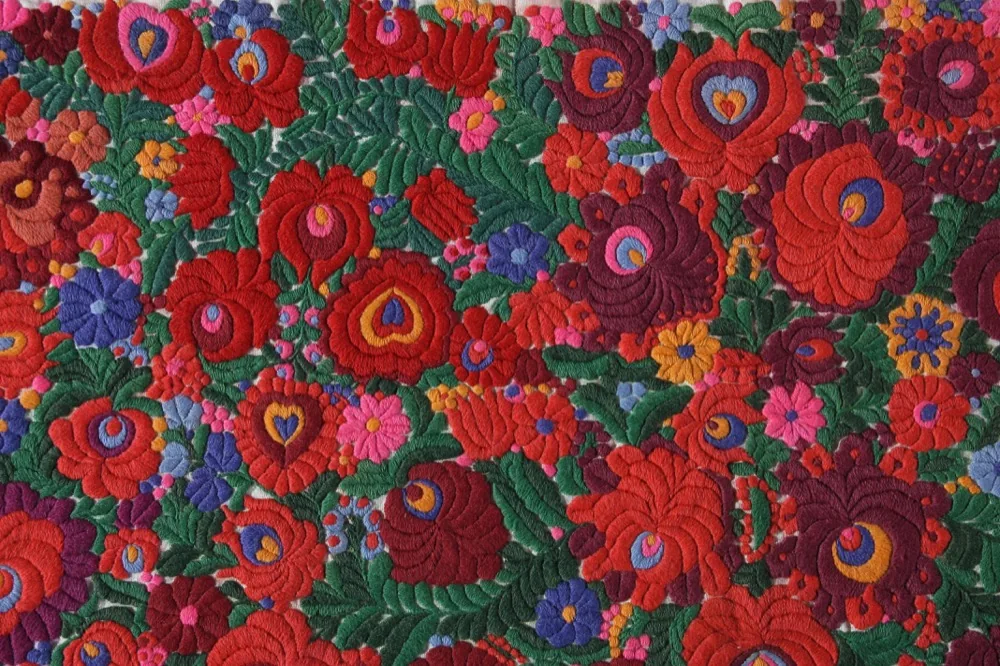
Follow one motif
In the Zalipie homestead, look for a painted pattern moving between a wall and a smaller surface. In Mezőkövesd, Matyó embroidery shows how floral patterns travel into articles of dress. Ask what part of a design the maker learned first.
See the work up close
Idrija lace workshops show how a series of movements with bobbins becomes an open pattern. Leave time to watch a small section form. In a village where people still live in painted houses, use the established public route or museum.
How to be a good guest
Ask before entering a courtyard or photographing close-up work, and agree before touching fabric or tools.
Stories and places to visit
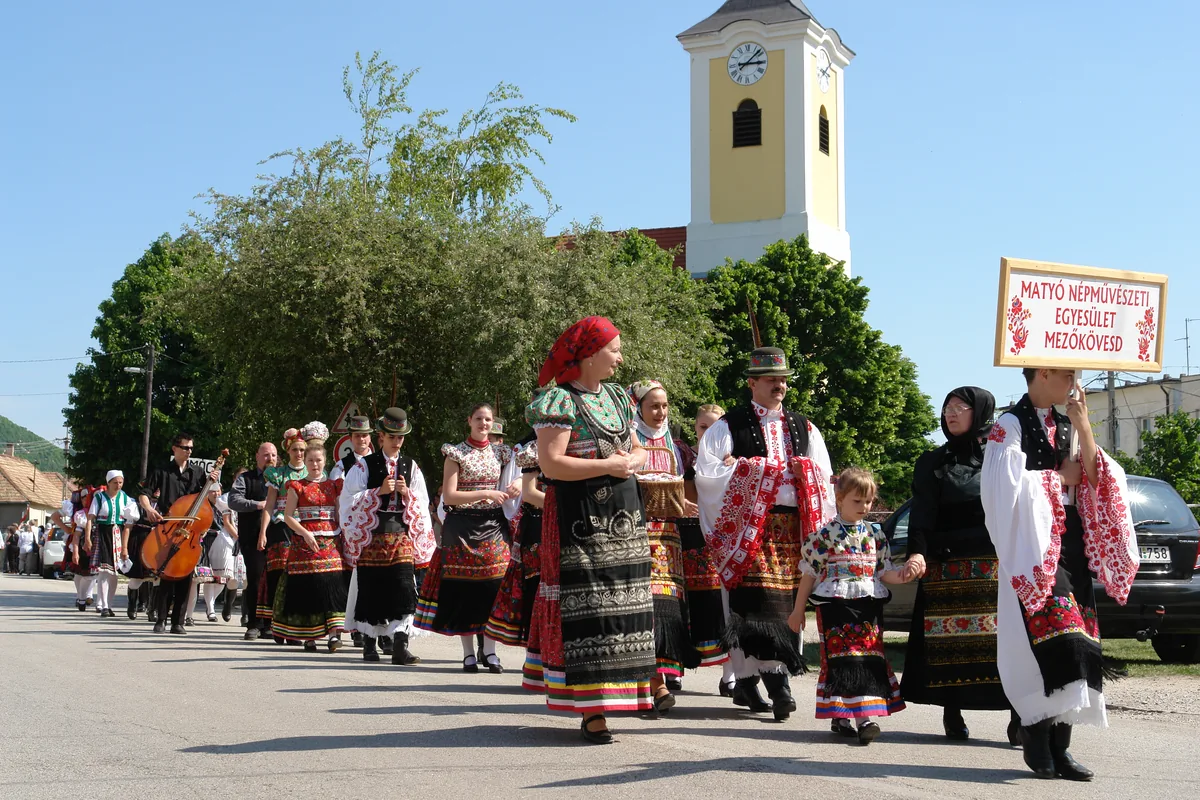
Mezőkövesd · Northern Hungary
 Mezőkövesd · Northern Hungary
The floral language of Matyó embroidery ↗
In Mezőkövesd, smaller flowers often surround a large Matyó rose. Find a line of coloured flowers on two different textiles and see how the maker fitted the design to a garment or a piece made for the home.
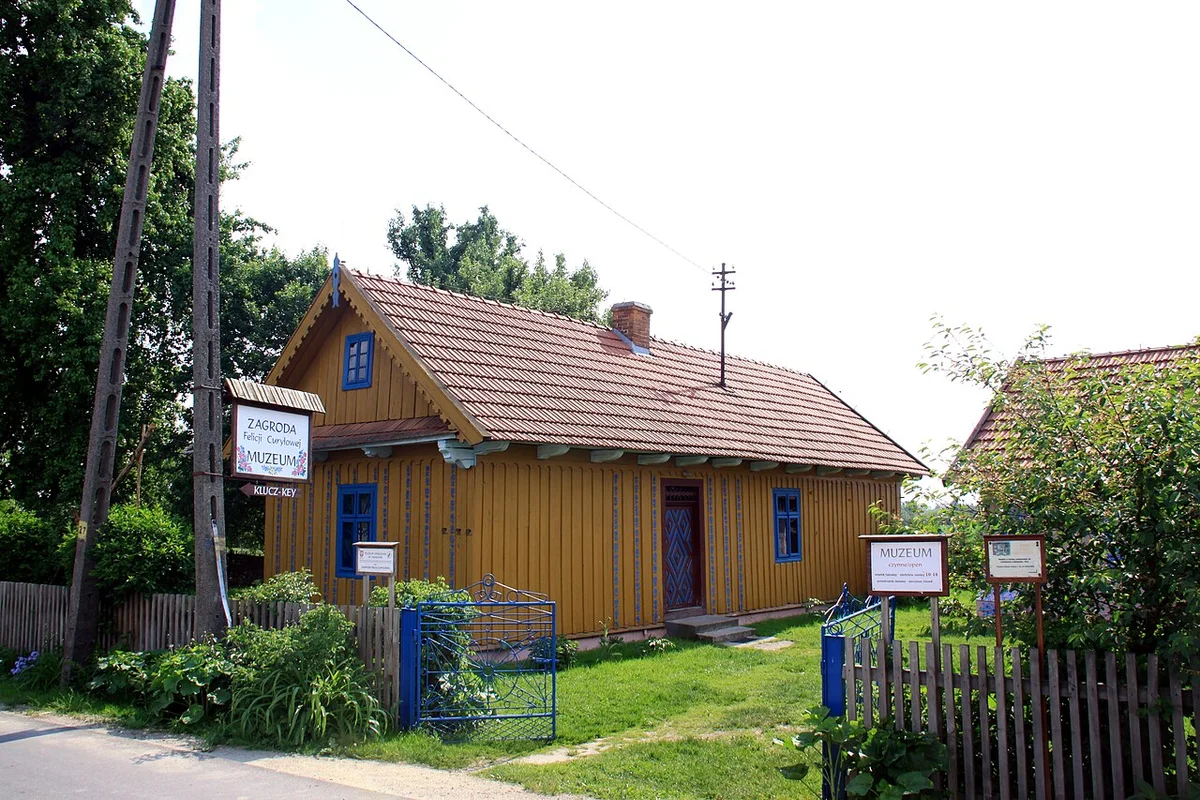
Zalipie · Małopolska
 Zalipie · Małopolska
Zalipie’s painted cottages ↗
Flowers painted on walls, wells and the buildings of a working farm are part of Zalipie’s village landscape. The Felicja Curyłowa homestead brings the tradition into focus before a walk through the village.
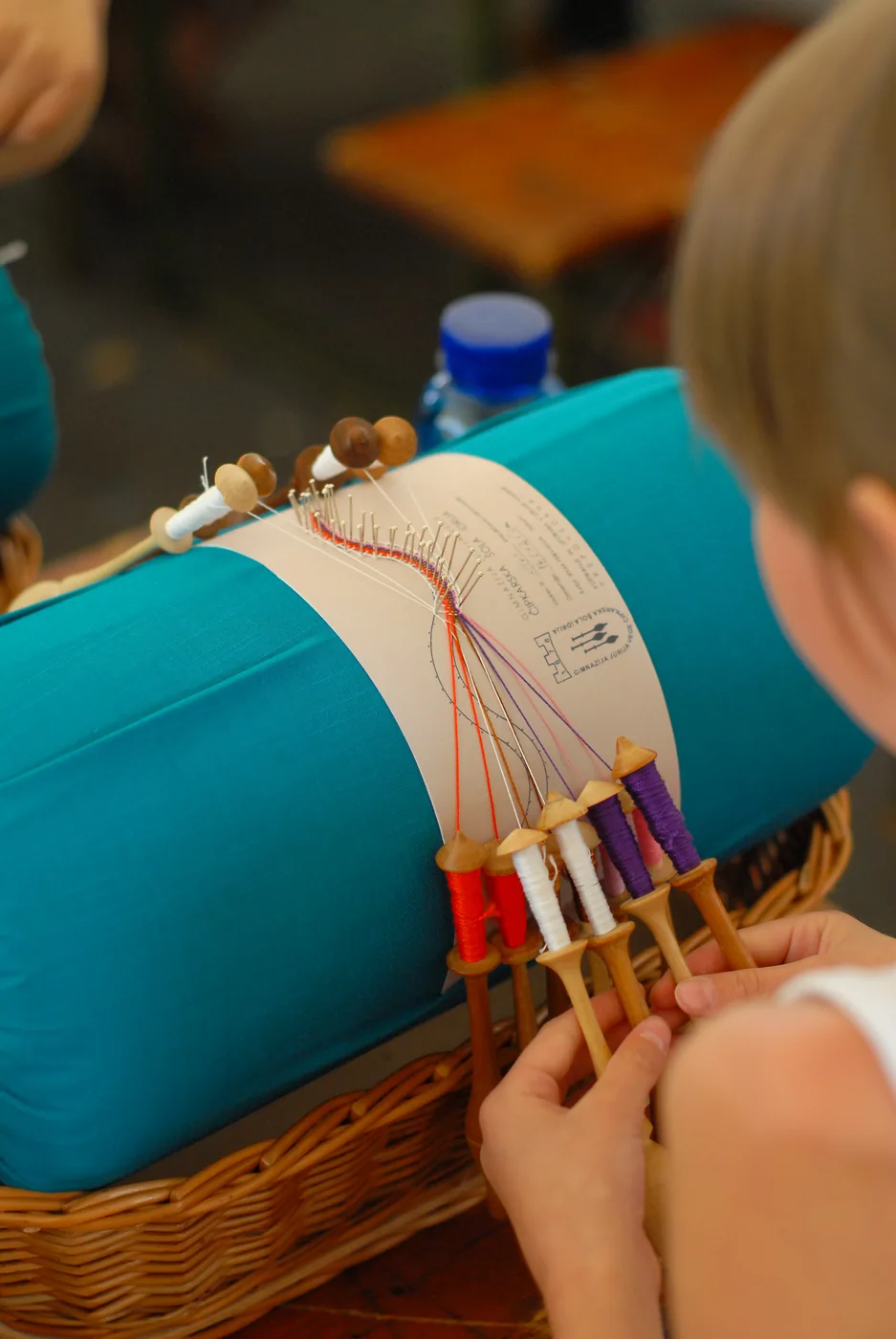
Idrija · Western Slovenia
 Idrija · Western Slovenia
Idrija bobbin lacemaking ↗
At a lace pillow in Idrija, the movement of wooden bobbins turns thread into pattern. The museum, workshops and festival show both how the work is done and how people learn it.